
For decades now, Indian families have been prioritising property as the best option to park their savings. Gold, fixed deposits and mutual funds vie for attention but the allure of a concrete asset continues to outweigh other options. As we advance towards 2026, this preference will be challenged by soaring property prices, fluctuating interest rates and a slew of competing investment choices.
So, is the investment in real estate a good move in 2026, or is it a habit we need to break? The reality is that it all depends on your needs, budget, and, above all, a clear-eyed assessment of the pros and cons. In this article, we will explore the true benefits as well as the main drawbacks of investing in property.
Pros of Investing in Real Estate
1. Long-Term Appreciation
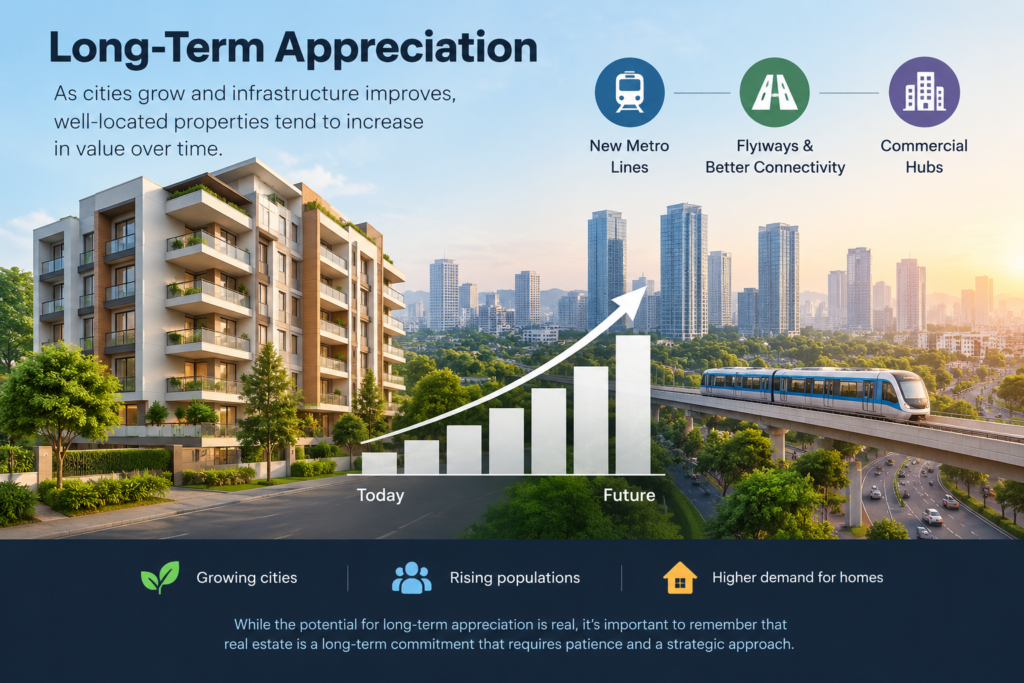
A key attraction for those considering buying a flat is the prospect of its long-term appreciation. After all, land cannot be created, cities only grow and flourish, and populations are drawn to thrive in metropolitan areas. As such, residential property tends to appreciate steadily over a period of a decade or two.
Especially when considering the anticipated infrastructure developments, such as new metro lines, flyways, and commercial hubs, the value of property in sought-after localities tends to grow steadily, too. With that said, and despite the appeal of compounding value, real estate investment is a long-term commitment that requires patience and a strategic mindset.
2. Passive Income
The second major perk of residential property investment is passive income in the form of rental income. After the initial purchase, renovation and furnishing of a flat, the ongoing management effort is relatively low – especially if you hire a competent property manager.
As such, property investment in India is an excellent choice for those wishing to create an additional source of income alongside a full-time job, or for those looking to retire and need an extra stream of revenue.

3. Tax Benefits
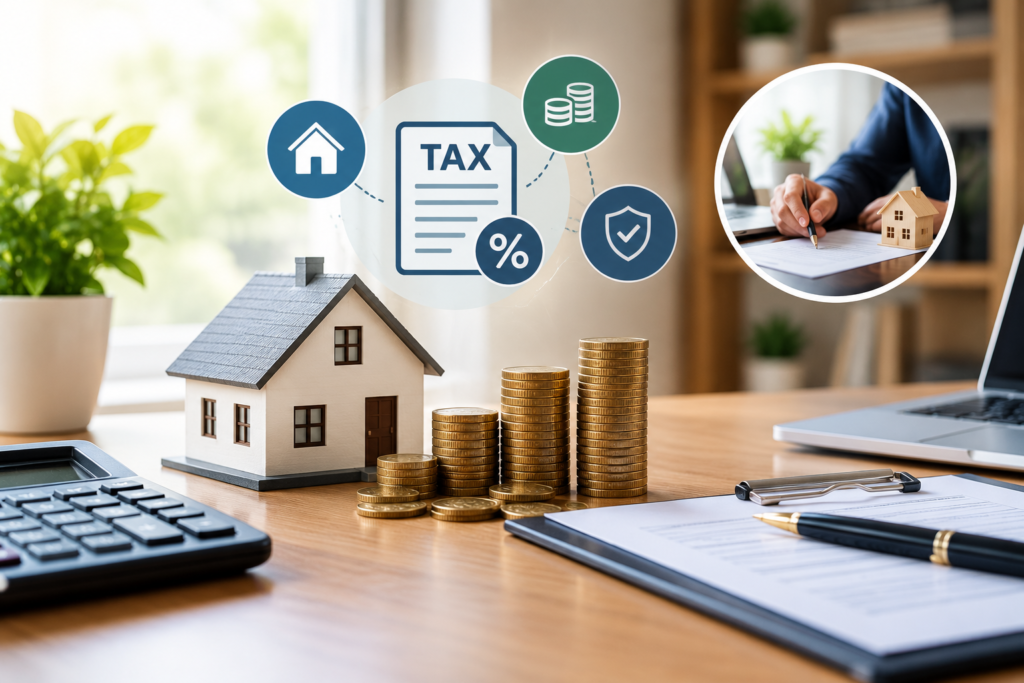
Buying a flat can be considerably more appealing when you take into account the tax benefits that apply to property investors in India. When in the old tax regime, taxpayers can claim deductions on the principal amount and the interest component of a home loan, subject to certain restrictions and limits.
However, it is important to keep in mind that the applicability and nuances of these benefits change with time and are different depending on the tax regime and whether the property is rented out or used as one’s primary residence. Always double-check the latest guidelines or consult a chartered accountant before taking any action.
4. Regular Rental Income
Closely related to the prospect of passive income is the regular rental income that a property owner can enjoy. The beauty of this perk is that it is entirely predictable and dependable – so long as you have a tenant in your flat.
A well-chosen property in a desirable location will always be in demand, which means you can enjoy regular rental income that goes towards covering your EMI installments. For most, this combination of consistent revenue and long-term appreciation is the primary appeal of property investment in India.

5. Diversification
Speaking of which, the primary appeal of diversifying one’s investments is security. If one asset class underperforms, the gains from another will more than make up for it. Stocks may plunge, fixed deposits may yield little to nothing, gold prices may plummet – but real estate prices rarely fall precipitously and consistently.
As such, adding property to one’s investment portfolio is an excellent move to smooth out the risks and reap the rewards of diversification.
Cons of Investing in Real Estate
1. High Investment
Unless you are buying a flat with cash, the upfront costs of a property purchase are always significant. Even aside from the price of the property itself, one must budget for the earnest money deposit, stamp duty, registration charges, brokerage, interiors and furnishings. Not only is this a challenging investment commitment to meet, but it also puts an additional strain on one’s finances.

2. Illiquidity
Unlike most other assets, property is notoriously illiquid. Once you buy a flat, it can be surprisingly hard to sell it – especially if the buyer is in no hurry. As such, a property owner may be faced with a situation where they need to sell their flat quickly but for considerably less than they expected.
In short, unless you are absolutely certain that you will not need to sell the flat for several years, investing in property is not a good idea.

3. Maintenance and Repair Expenses
Another challenge unique to property investment is the burden of maintenance and repair costs. Even after the initial furnishing and renovation, an owner of a property must factor in the ongoing expenses related to society maintenance charges, property tax, plumbing and electrical repair, painting and more.
These costs can eat significantly into one’s revenue from a rental property. Furthermore, if a tenant leaves, the property may require additional upkeep before a new one can be found.

4. Fluctuating Property Prices
Lastly, but not least, when it comes to property investment, price fluctuations are both a blessing and a curse. On the one hand, an appreciating market allows for substantial gains, especially when purchasing a flat in an up-and-coming area.
On the other hand, however, there is no guarantee that this will be the case in the next few years. In fact, specific micro-markets may experience a prolonged slump for a variety of reasons, and one cannot predict which localities will see a sustained increase in value. Fluctuating prices mean that any given investment in real estate is a gamble, regardless of how well-researched it may be.
Why Location Matters Most:
If there is one crucial consideration that determines whether one’s property purchase will be a sound investment, it is location. The same budget can buy a flat in a prime location with excellent connectivity and a desirable locale, or a similar flat in an area that is several years away from seeing any developments.
For those considering buying a flat in Delhi, this is an important consideration. As the capital city of India, Delhi has natural advantages in terms of the property market. There are plenty of job opportunities, a vast network of metro lines and other means of public transport, as well as outstanding social amenities.
Furthermore, demand for rental properties in Delhi always stays high, which adds to the appeal. At the same time, however, the price of property in Delhi is also high compared to other cities in the country, and finding good deals requires additional research and due diligence. Always remember that localisation is key – so compare the options in your target area before making a commitment.
Is Real Estate a Good Investment in 2026?
An investment in real estate is a good move in 2026 for those that need it to be. For the patient and the prudent, the rewards outweigh the risks. For the impatient and those without the financial means, this is not an appropriate commitment. As you can see, the choice to buy a flat is a highly personal one that depends on each individual’s needs, budget, and financial goals.
If you are thinking about buying a flat as an investment, determine your primary goal (appreciation, rental yield or both), calculate your expected revenue, consider the target area, review all legal documentation and make sure to leave enough of a financial cushion.
A wise investor will always remember that the road to wealth is paved with patience and preparation
Disclaimer: This article is intended for informational purposes only and should not be construed as financial, tax, or legal advice. Please consult with a qualified professional before making any investment or financial decisions.